Early Roman republic
Each consul had near-kingly executive power, but could veto the other and had to surrender power after one year. Early Republican Rome was an oligarchy dominated by patricians (descendans of the original senators), while plebeians had limited political power and pressed for greated political and legal equality. Dictator was a temporary emergency magistrate granted near-absolute authority, normally for a maximum of six months, to deal with a crisis before relinquishing power.
Most Romans were farmers, with land concentrated among wealthy elites; tensions over debt, land, and political representation drove the Conflict of the Orders. Women, slaves, and immigrants had virtually no political rights. Religion remained important, particularly through sacred oaths. External wars were particularly against the Volscians, Aequi, Veii, and Sabines.
Timeline
Founding of the Republic
- 509 BCE: Brutus and Collatinus became the first consuls; Brutus required Romans to swear never again to allow a king to rule Rome.
- 509 BCE: Collatinus resigned because of his Tarquin family connection and was replaced by Publius Valerius Publicola.
- 509 BCE: A royalist conspiracy, including Brutus' sons, was exposed; Brutus allowed his sons to be executed for treason.
- 509 BCE: Rome defeated an army from Veii attempting to restore Tarquin; Brutus was killed in battle.
- ~509 BCE: Publicola introduced the right to appeal magistrates' decisions to the people's assemblies and made it legal to kill anyone attempting to make himself king.
- 509 BCE: Horatius Pulvillus became consul, completing the Republic's first year.
Early wars and the Conflict of the Orders
- ~508 BCE: Rome was attacked by Lars Porsena of Clusium, who may have captured Rome before withdrawing; later Roman tradition portrayed the invasion as a heroic Roman victory.
- ~496 BCE: Rome defeated a Latin coalition at the Battle of Lake Regillus, restoring Roman dominance over Latium.
- ~494 BCE: The plebeians seceded from Rome over debt and political grievances, establishing a camp on the Sacred Mount.
- 494 BCE: The plebeian secession led to the creation of the tribunate; two tribunes were elected annually to protect plebeians from patrician power.
- 494 BCE: Tribunes received sacrosanctity, making it illegal to harm them; their powers would later expand to include vetoing government actions.
- ~480 BCE: Rome largely contained the Volscian threat, though fighting with the Volscians and Aequi (nomadic tribes from east, grazing) continued.
- 473 BCE: Tribunes successfully pushed for their election by the tribal assembly rather than the centuriate assembly.
- 462 BCE: Tribunes proposed that Roman laws be written down and made publicly accessible.
- 460 BCE: Cincinnatus served as consul and opposed plebeian reforms; his career later became a symbol of Roman republican virtue.
- ~460 BCE: A Sabine force briefly captured Rome’s citadel before being expelled.
- 458 BCE: Cincinnatus was appointed dictator during a military crisis, defeated the Aequi, and resigned after only fifteen days, returning to his farm.
- 451 BCE: Political and economic disruption, including plague and famine, led to the creation of a decemvirate to codify Roman law.
- 451-450 BCE: The Twelve Tables established Rome’s first publicly accessible written code, covering areas including legal procedure, debt, inheritance, property, marriage, and criminal penalties.
- ~450 BCE: The decemvirate refused to relinquish power after completing its work, but was eventually forced to resign following a plebeian secession and popular revolt.
- 449 BCE: The number of tribunes was increased to ten, while tribunes were formally elected through the tribal assembly (Comitia Tributa - 35 tribes, each one vote).
- 445 BCE: Patrician–plebeian marriage was legalized, removing a major barrier between the two social orders.
- 444 BCE: Military tribunes with consular power were introduced as an alternative to the consulship, allowing plebeians to hold executive power while the consulship remained restricted.
- ~443 BCE: The office of censor was created to administer the census and became an important patrician-controlled magistracy.
- 439 BCE: During a famine, the wealthy plebeian Malius distributed grain to the population and later conspired to make himself king; Cincinnatus was appointed dictator and suppressed the conspiracy.
The war with Veii
- ~435-425 BCE: Rome fought to retain control of Fidenae, an important settlement on the Tiber, amid renewed conflict with Veii.
- ~425 BCE: Rome recaptured Fidenae, strengthening its position for the coming conflict with Veii.
- ~400 BCE: Rome began a major war against Veii, driven by competition over trade, salt, and fertile land.
- ~400-396 BCE: Soldier pay was introduced to compensate troops kept away from their farms as siege of Veii required year-round army.
- ~396 BCE: Marcus Furius Camillus was appointed dictator and led the final campaign against Veii, capturing and sacking it. After killing or enslaving everyone, Romans began settling it, taking advantage of fertile soil to end the famine.
- ~396 BCE: Rome became a major economic power in central Italy, benefiting from fertile land and control of the salt trade.
- ~395-394 BCE: Camillus went into voluntary exile after political conflict over his handling of Veii's spoils.
The Gallic Sack and recovery
- ~390 BCE: The Senones, a Gallic tribe led by Brennus, invaded central Italy and defeated the Roman army at the Allia River.
- ~390 BCE: The Senones occupied and sacked Rome, while the Romans held out in the fortified Capitoline citadel. In the end Rome paid the Gauls a large ransom to withdraw.
- ~390 BCE: Much of city was destroyed by fire, prompting debate over whether the city should be abandoned. It was decided to rebuild rather than relocate to Veii, Camillus returning and standing firm behind it.
- ~380 BCE: Rome was rebuilt, largely without a central plan and during renewed attacks from Volescians, Aequi, Latins and colonies, contributing to the irregular layout of the city.
- ~380 BCE: Marcus Furius Camillus repeatedly led Rome's armies during its recovery from the Gallic invasion.
- ~380 BCE: Debt became a major source of plebeian unrest as indebted Romans faced imprisonment and enslavement by creditors, and plebeians demanded greater access to land.
- ~367 BCE: The Licinio-Sextian reforms restored the consulship and allowed a plebeian to hold one of the two consulships, Lucius Sectius becoming the first plebeian consul. Other reforms included restrictions on landholding and measures addressing debt.
- ~367 BCE: Death of Camillus marked the end of an era of Roman recovery after the Gallic sack.
Gallery
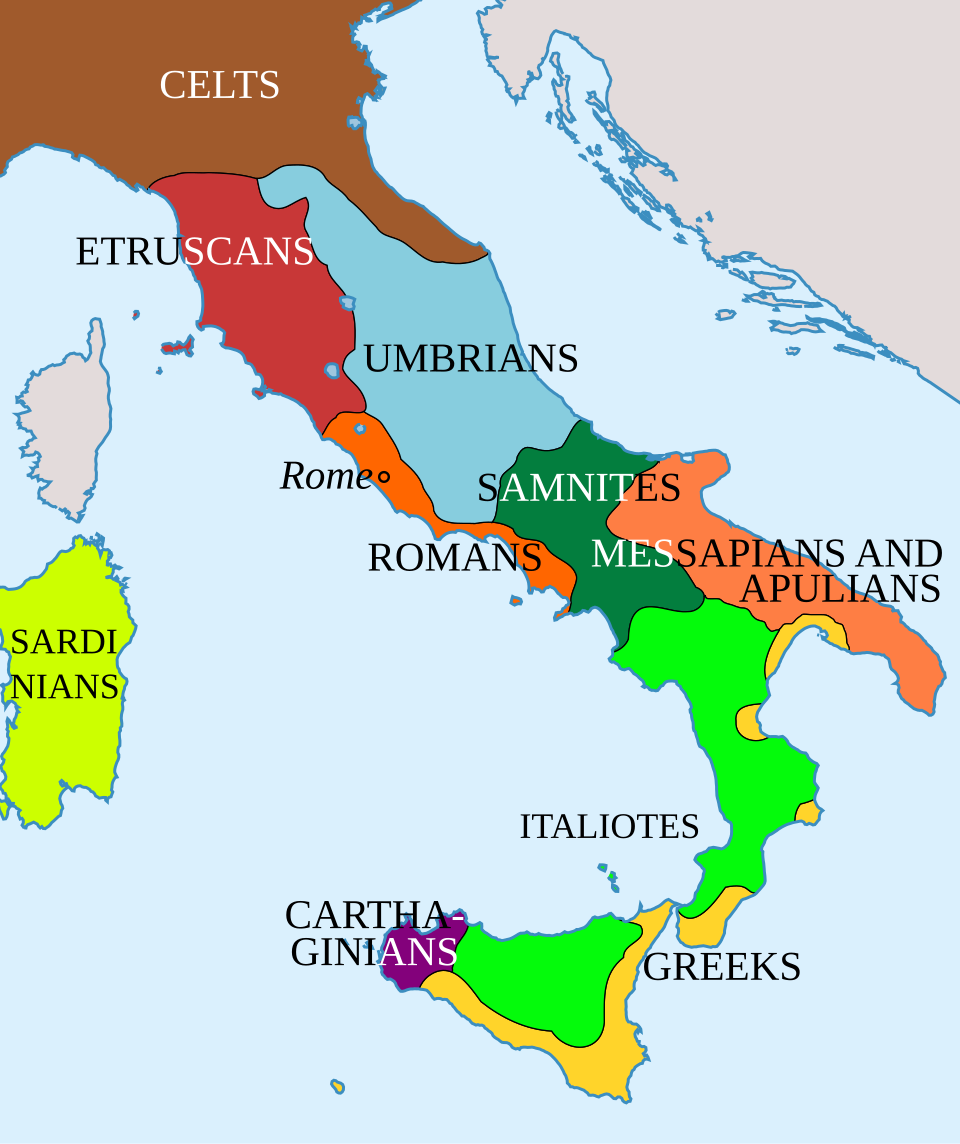
Happening elsewhere at the time
Ancient Rome series
- Origins of Rome
- Kingdom of Rome
- Early Roman republic
- Middle Roman republic
- Late Roman republic